From the anti-lock brakes in your car to the thermostat on your wall, microcontrollers run the modern world. These small but powerful chips only do what they are told, and telling them what to do is what microcontroller programming is all about. Whether you are a student experimenting with your first LED, a hobbyist building a Bluetooth-controlled robot, or an engineer designing a commercial product, the programming method you choose shapes every part of the experience: how fast you learn, how much control you have over the hardware, and how far you can scale your project.
In this comprehensive guide, we explore every major type of microcontroller programming, from beginner-friendly graphical tools to performance-critical assembly, from widely used high-level languages like C/C++ and Python to the integrated development environments (IDEs) that tie everything together. By the end you will know which microcontroller programming language fits your skill level and project goals, and you will have concrete examples to get started right away.
ما ستتعلمه
After reading this article you will understand the five main categories of microcontroller programming, the differences between graphical, low-level, high-level, and scripting approaches, and how IDEs connect all of these workflows. You will also see a side-by-side comparison table, practical code examples for Arduino and ESP32, a use-case decision guide, and answers to the most frequently asked questions about how to program a microcontroller.
What Is Microcontroller Programming?
A microcontroller is a small computer on a single integrated circuit. It contains a processor (CPU), memory (RAM and flash), and input/output peripherals, all on one chip. Common examples include the ATmega328P found on the Arduino Uno, the ESP32 used for Wi-Fi and Bluetooth projects, and the RP2040 inside the Raspberry Pi Pico.
Microcontroller programming is the process of writing instructions that the chip’s processor executes in order to read sensors, control actuators, communicate with other devices, and carry out any task your project demands. Unlike desktop software, microcontroller code typically runs in a continuous loop with no operating system, which means the programmer has direct responsibility for timing, memory management, and hardware interaction.
There is no single “best” way to program a microcontroller. The right choice depends on your experience level, the complexity of your project, and whether you prioritize ease of learning, execution speed, or fine-grained hardware control. The sections below break down every major approach so you can make an informed decision.
Overview of the Main Types of Microcontroller Programming
Microcontroller programming methods fall into five broad categories: graphical (block-based) programming, assembly and low-level programming, high-level compiled languages, scripting and interpreted languages, and IDE-based workflows. Each category addresses different needs. Graphical tools lower the entry barrier for beginners. Assembly gives engineers the maximum possible control. High-level languages like C and C++ strike a balance between readability and performance. Scripting languages such as MicroPython enable rapid prototyping. And modern IDEs bundle the editor, compiler, debugger, and upload tools into one environment, making any programming language easier to use.
Graphical Programming for Microcontrollers
What Is Graphical Programming?
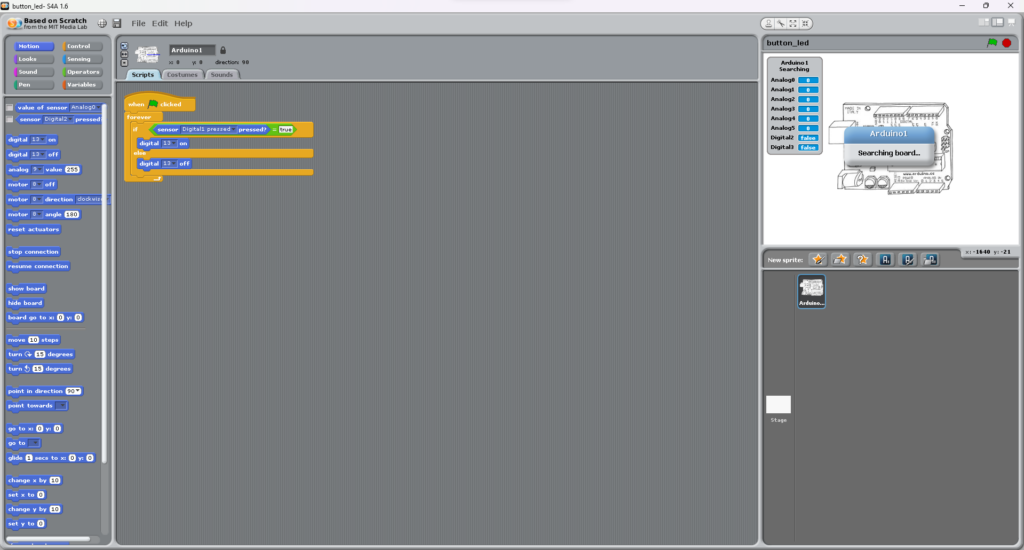
Graphical programming replaces typed code with visual drag-and-drop blocks. Each block represents a programming concept such as a loop, a conditional statement, a variable assignment, or a hardware command. Users snap blocks together to build a program, much like assembling puzzle pieces. Because the environment prevents syntax errors and makes logic visible at a glance, graphical programming is widely considered the gentlest entry point into the world of coding.
Who Is It For?
Graphical programming is ideal for absolute beginners, younger students, and educators who want to teach computational thinking without the overhead of text-based syntax. It is also useful for artists, designers, and hobbyists who want to experiment with hardware quickly. If you have never written a line of code before, starting with blocks helps you internalize core programming patterns — loops, conditionals, functions, and variables — before moving to a text-based language.
Popular Graphical Programming Tools
Scratch, developed by the MIT Media Lab, is one of the most widely used graphical programming environments in the world. While Scratch itself is primarily aimed at creating animations and games on a computer, extensions such as S4A (Scratch for Arduino) let users control physical hardware from within the Scratch interface.
Blockly, created by Google, is an open-source library that powers the drag-and-drop editors in many educational platforms. Blockly can generate real code in JavaScript, Python, Lua, or other languages behind the scenes, which makes it a natural stepping stone from blocks to text.
Arduino Create (block-based mode) and similar platforms allow users to build code for Arduino boards by dragging blocks, then upload the result directly to the microcontroller. This approach is particularly beneficial for beginners who want to focus on the creative and experimental aspects of their electronics projects rather than getting stuck on complex code. If you are just getting started with Arduino-based electronics, our guide on building a line following robot for beginners shows how real projects come together once you understand the basics of programming your board.
Advantages of Graphical Programming
Visual representations make abstract concepts tangible and help learners grasp logic quickly. The block-based approach is engaging and interactive, which keeps students motivated. It also removes the barrier of text-based syntax, making coding accessible to younger learners and non-native English speakers. Additionally, graphical programming allows rapid prototyping: you can test and iterate on ideas almost instantly, which is extremely valuable in educational and creative settings.
Limitations and When to Move Beyond Blocks
As projects grow in complexity, the block-based interface can become cumbersome. Nesting dozens of blocks makes the workspace cluttered and hard to manage. Graphical environments also lack the fine-grained control over hardware registers, memory, and timing that text-based languages provide. Most learners naturally transition to text-based programming, typically C/C++ or MicroPython, once they are comfortable with fundamental programming concepts. Think of graphical programming as an excellent launchpad rather than a long-term destination.
Assembly and Low-Level Programming
What Is Assembly Language?
Assembly language is a low-level programming language that maps almost directly to the machine instructions executed by the microcontroller’s processor. Instead of writing binary ones and zeros, you write short human-readable mnemonics like MOV, ADD, ، و JMP that the assembler translates into machine code. Each assembly instruction corresponds to a single operation performed by the CPU, which means the programmer controls exactly what the hardware does on every clock cycle.
Why Assembly Offers Maximum Control
Because there is no abstraction layer between your code and the hardware, assembly lets you squeeze every last drop of performance out of a chip. You can manage individual CPU registers, configure peripheral hardware at the bit level, and create timing routines that are accurate down to a single clock cycle. This makes assembly essential in scenarios where performance and deterministic timing are non-negotiable — for example, in signal processing, safety-critical automotive systems, or extremely memory-constrained devices.
Why Assembly Is Harder for Beginners
The same lack of abstraction that makes assembly powerful also makes it difficult. The code is verbose: a task that takes one line in Python might take dozens of lines in assembly. Assembly is also architecture-specific, meaning code written for an AVR chip (Arduino) will not run on an ARM chip (STM32) without being completely rewritten. Debugging is more complex, and reading someone else’s assembly code is notoriously challenging. For these reasons, assembly is rarely the first language a beginner learns.
Where Assembly Is Still Relevant Today
Despite the rise of high-level languages, assembly has not disappeared. It is still used in bootloaders, interrupt service routines that must execute in a guaranteed number of cycles, device driver initialization, and embedded security firmware. Many professional embedded C projects include small sections of inline assembly to handle time-critical or hardware-specific operations. Understanding assembly, even at a basic level, gives you a deeper appreciation for how microcontrollers actually work under the hood.
High-Level Languages for Microcontrollers
High-level languages provide a layer of abstraction over the hardware. Instead of manipulating individual registers and memory addresses, you work with readable constructs — variables with descriptive names, for-loops, functions, and libraries — that the compiler or interpreter translates into machine instructions. This abstraction makes code faster to write, easier to read, and more portable across different hardware platforms.
Embedded C and C++
C and C++ are the dominant languages in the embedded and microcontroller world. The Arduino programming language is itself a simplified framework built on top of C/C++, which is why most Arduino tutorials you see online are written in this language family. C gives you low-level access to hardware (pointers, direct register manipulation) while still providing structured programming features like functions and data types. C++ adds object-oriented capabilities, classes, and templates, which help organize larger codebases.
The combination of performance, hardware control, and broad compiler support makes C/C++ the default choice for production embedded systems. If you have worked through any of our Arduino tutorials — for instance, our servo motor control with joystick and OLED display project — you have already been writing C/C++ code, even if the Arduino IDE made it feel simpler.
Python, MicroPython, and CircuitPython
Python has become one of the most popular programming languages in the world thanks to its clean, readable syntax and gentle learning curve. MicroPython and CircuitPython are lean implementations of Python 3 designed to run directly on microcontrollers such as the ESP32, RP2040, and various SAMD-based boards.
With MicroPython you can type commands into a live REPL (Read-Eval-Print Loop) connected to your board and see results instantly — no compilation step required. This interactive workflow makes MicroPython exceptional for prototyping, education, and any situation where rapid iteration matters more than raw execution speed. The trade-off is that interpreted Python code runs significantly slower than compiled C and uses more memory, which can be a limitation on smaller chips.
JavaScript and Other Scripting Languages
JavaScript has found a niche in IoT (Internet of Things) microcontroller development through platforms such as Espruino and the Johnny-Five framework. Its event-driven programming model is a natural fit for devices that spend most of their time waiting for sensor input or network messages. Lua, another lightweight scripting language, is popular in the NodeMCU firmware for ESP8266 and ESP32 boards. While these scripting languages are not as widely adopted as C or MicroPython in the microcontroller space, they are worth knowing about if your background is in web development and you want to leverage familiar skills.
Trade-Offs: Memory, Speed, Readability, and Hardware Control
Every language choice involves trade-offs. C and C++ compile to tight, efficient machine code that runs fast and uses minimal RAM, but the code is more complex and error-prone for beginners. MicroPython and CircuitPython prioritize readability and rapid development, but they need more memory and execute slower. Assembly gives unmatched control but at the cost of portability and development speed. Graphical tools are the easiest to start with but the hardest to scale. The comparison table later in this article lays out these trade-offs side by side so you can make the right call for your specific project.
IDEs and Development Environments for Microcontrollers
Language vs. Compiler vs. IDE: Understanding the Difference
Before diving into specific tools, it helps to clarify three terms that beginners often confuse. A programming language (like C++ or Python) defines the syntax and rules you use to write code. A compiler or interpreter is the software that translates your human-readable code into machine instructions the microcontroller can execute. An IDE (Integrated Development Environment) is the application you sit in front of: it bundles a code editor, the compiler or interpreter, upload tools, a serial monitor, and often a debugger into one unified workspace. You can use the same language with different IDEs, and many IDEs support multiple languages.
Arduino IDE
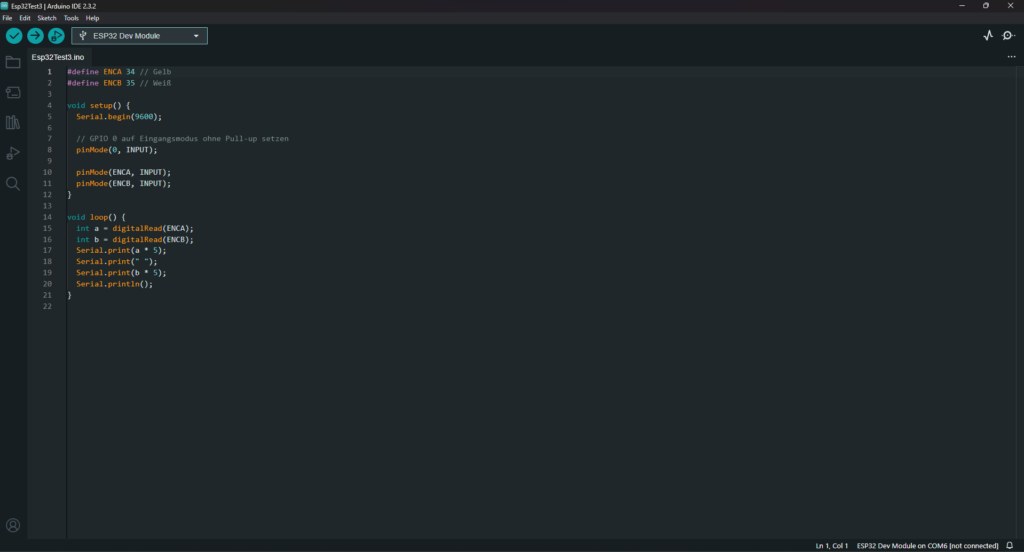
The Arduino IDE is the most widely used development environment for hobbyist microcontroller programming. It supports C and C++, provides a simple one-click upload button, includes a serial monitor for debugging, and offers a massive library ecosystem through the built-in Library Manager. The Arduino IDE version 2.x added features like auto-completion, an integrated debugger, and a more modern interface. For anyone just starting out with microcontrollers, the Arduino IDE is typically the recommended first tool. Many of our tutorials at OmArTronics, including the Arduino IR remote LED and servo door project, use the Arduino IDE as the development environment.
PlatformIO
PlatformIO is a professional-grade, open-source ecosystem that runs as an extension inside Visual Studio Code. It supports hundreds of boards (Arduino, ESP32, STM32, and many more), offers advanced features like unit testing and static code analysis, and manages libraries and toolchains automatically. If you outgrow the Arduino IDE and want a more powerful development experience without switching languages, PlatformIO is the natural next step.
Thonny and MicroPython Environments
Thonny is a lightweight, beginner-friendly Python IDE that has excellent built-in support for MicroPython. It can detect a connected MicroPython board, open a live REPL, upload scripts, and manage files on the microcontroller’s filesystem — all from a clean, minimal interface. For ESP32 or Raspberry Pi Pico projects using MicroPython, Thonny is usually the quickest way to get started.
Professional IDEs
In commercial embedded development, engineers often use vendor-specific IDEs like STM32CubeIDE (for STM32 chips), MPLAB X (for Microchip PIC and dsPIC microcontrollers), or Keil MDK (for ARM Cortex-M devices). These tools offer advanced debugging with hardware breakpoints, real-time variable watches, peripheral register views, and sometimes RTOS-aware debugging. While they are overkill for hobby projects, knowing they exist helps you understand the full landscape of microcontroller programming tools.
Microcontroller Programming Methods: Comparison Table
The table below summarizes the key characteristics of each microcontroller programming approach to help you choose the right one for your needs.
| Method / Language | Difficulty | Hardware Control | Execution Speed | Readability | Best For | Typical Platforms |
|---|---|---|---|---|---|---|
| Graphical (Scratch, Blockly) | Very Easy | Limited | N/A (generates code) | Very High (visual) | Education, first-time learners | Arduino (via S4A, Blockly), micro:bit |
| Assembly | Very Hard | Maximum | Fastest | قليل | Time-critical routines, bootloaders | AVR, PIC, ARM (architecture-specific) |
| C / Embedded C | معتدل | High | Very Fast | معتدل | Production firmware, Arduino projects | Arduino, ESP32, STM32, PIC |
| C++ | Moderate–Hard | High | Very Fast | معتدل | Complex projects, OOP-based design | Arduino, ESP32, STM32 |
| MicroPython / CircuitPython | Easy | معتدل | Slower (interpreted) | Very High | Prototyping, education, IoT | ESP32, RP2040, SAMD boards |
| JavaScript (Espruino, Johnny-Five) | Easy–Moderate | معتدل | Slower | High | IoT, web-integrated devices | Espruino boards, ESP8266 |
Best Microcontroller Programming Choice by Use Case
Different goals call for different tools. Here is a practical decision guide based on common scenarios.
Best for absolute beginners: Start with graphical block-based programming (Scratch or Blockly) to build confidence with logic and loops, then graduate to the Arduino IDE with C/C++. This two-step path is the most well-supported and widely documented learning journey in the microcontroller world.
Best for education and classroom settings: Graphical programming combined with physical computing kits (Arduino, micro:bit) gives students a tangible, engaging way to learn. Teachers can use block-based tools for younger learners and introduce the Arduino IDE for intermediate students.
Best for robotics projects: C/C++ through the Arduino IDE or PlatformIO is the standard. Robotics demands real-time motor control, sensor fusion, and communication protocols — all areas where compiled C/C++ excels. For an example of a robotics project that combines motors, sensors, and Bluetooth communication, see our OmObiArm Bluetooth-controlled robot arm tutorial.
Best for performance-critical embedded systems: Embedded C or C++ compiled with vendor toolchains (STM32CubeIDE, MPLAB X, Keil) gives you the tightest control over memory and execution timing. Small sections of inline assembly may be added where cycle-accurate performance is required.
Best for fast prototyping and IoT: MicroPython on an ESP32 or Raspberry Pi Pico lets you write readable code, test interactively via the REPL, and iterate in seconds rather than minutes. It is an excellent choice when development speed matters more than runtime performance.
Practical Examples
The examples below give you a feel for what code looks like in the three most common microcontroller programming styles. They are intentionally simple — each one blinks an LED or performs a basic action so you can compare syntax and structure without distraction.
Arduino (C/C++) — Blink an LED
// Arduino C/C++ — Blink the built-in LED
void setup() {
  pinMode(LED_BUILTIN, OUTPUT);  // Set LED pin as output
}

void loop() {
  digitalWrite(LED_BUILTIN, HIGH);  // Turn LED on
  delay(1000);                      // Wait one second
  digitalWrite(LED_BUILTIN, LOW);   // Turn LED off
  delay(1000);                      // Wait one second
}
This is the classic first sketch every Arduino beginner writes. The setup() function runs once at power-on, and the حلقة() function repeats forever. The Arduino framework handles the low-level hardware initialization behind the scenes, so you can focus on logic.
ESP32 with MicroPython — Blink an LED
# MicroPython on ESP32 — Blink an LED on GPIO 2
from machine import Pin
from time import sleep

led = Pin(2, Pin.OUT)

while True:
    led.value(1)   # Turn LED on
    sleep(1)        # Wait one second
    led.value(0)   # Turn LED off
    sleep(1)        # Wait one second
Notice how the MicroPython version reads almost like plain English. There is no separate setup and loop structure; you simply write a while True loop. The machine module provides direct access to GPIO pins. You can type this code line by line into the Thonny REPL and watch each command take effect in real time.
Graphical Blocks for Beginners
In a graphical environment like Blockly or S4A, the same blink program would look roughly like this in pseudo-block form: a “forever” loop block containing a “set pin 13 HIGH” block, a “wait 1 second” block, a “set pin 13 LOW” block, and another “wait 1 second” block. There is no typing involved — you drag each block into place. Behind the scenes, the tool generates real C/C++ or JavaScript code and uploads it to the board.
Frequently Asked Questions (FAQ)
What is the most common microcontroller programming language?
C and C++ are by far the most common. The vast majority of production embedded firmware, Arduino sketches, and ESP32 projects are written in C or C++. These languages offer an excellent balance of performance, hardware access, and portability.
Is Arduino a programming language?
Strictly speaking, no. The Arduino programming language is a set of C/C++ functions and libraries (known as the Arduino framework) that simplify common tasks like reading pins and communicating over serial. When you write an Arduino sketch, you are writing C/C++ code that is compiled by a standard C++ compiler.
Can I program a microcontroller with Python?
Yes. MicroPython and CircuitPython let you run Python 3 code directly on supported microcontrollers like the ESP32, Raspberry Pi Pico (RP2040), and various Adafruit SAMD boards. You can even interact with the chip through a live REPL, typing commands and seeing results immediately.
What is the best programming language for microcontroller beginners?
For most beginners, starting with the Arduino IDE and its C/C++ framework is the best path because of the enormous community, endless tutorials, and affordable hardware. If you already know Python, MicroPython on an ESP32 or RP2040 is an excellent alternative that lets you leverage your existing skills.
What is the difference between an IDE and a programming language?
A programming language is a set of rules and syntax for writing instructions. An IDE is the software application where you write, compile, debug, and upload your code. The Arduino IDE, for example, is the tool; C/C++ is the language you use inside it. You can use the same language in multiple IDEs.
Do I need to learn assembly to work with microcontrollers?
No. The vast majority of microcontroller projects can be completed entirely in C/C++ or MicroPython without ever writing a line of assembly. However, a basic understanding of assembly helps you appreciate how the hardware works at the lowest level and can be useful for debugging or optimizing time-critical code.
What is the difference between MicroPython and CircuitPython?
MicroPython is the original Python 3 implementation for microcontrollers, started by Damien George. CircuitPython is Adafruit’s fork of MicroPython with an emphasis on beginner-friendliness, consistent board support, and integration with Adafruit hardware. The core language is almost identical; the differences lie in supported boards, library naming conventions, and community focus.
Which microcontroller should I buy to start learning?
The Arduino Uno is the classic recommendation for beginners because of its simplicity, massive community support, and compatibility with virtually every tutorial. If you want built-in Wi-Fi and Bluetooth from day one, the ESP32 development board is an excellent and affordable choice. For MicroPython enthusiasts, the Raspberry Pi Pico offers great value.
Can I use Visual Studio Code to program microcontrollers?
Yes. With the PlatformIO extension installed, Visual Studio Code becomes a powerful microcontroller IDE supporting Arduino, ESP32, STM32, and many other platforms. PlatformIO handles toolchain installation, library management, and board detection automatically.
Is graphical programming only for kids?
No. While graphical tools like Scratch and Blockly are popular in K–12 education, they are also used by adult beginners, artists, and rapid-prototyping teams. However, for serious or complex projects, most users eventually transition to text-based programming for better control and scalability.
خاتمة
Microcontroller programming is not a one-size-fits-all discipline. Graphical tools give beginners a gentle, visual on-ramp. Assembly offers unparalleled hardware control for specialized use cases. High-level languages like C/C++ dominate real-world embedded development because they balance performance with readability. MicroPython and CircuitPython make microcontroller programming feel as approachable as desktop scripting. And modern IDEs tie the entire workflow together, from writing code to flashing firmware.
If you are brand new, our recommendation is simple: pick up an Arduino Uno, install the Arduino IDE, and work through your first blink sketch in C/C++. Once you are comfortable with the basics, expand into sensors, actuators, and communication — our DIY 6-DOF robotic arm with Bluetooth control tutorial is a great next challenge. As your skills grow, explore MicroPython for rapid prototyping on an ESP32, or dive into PlatformIO for a more professional development setup. The world of embedded systems is vast, rewarding, and waiting for you to build something amazing.